
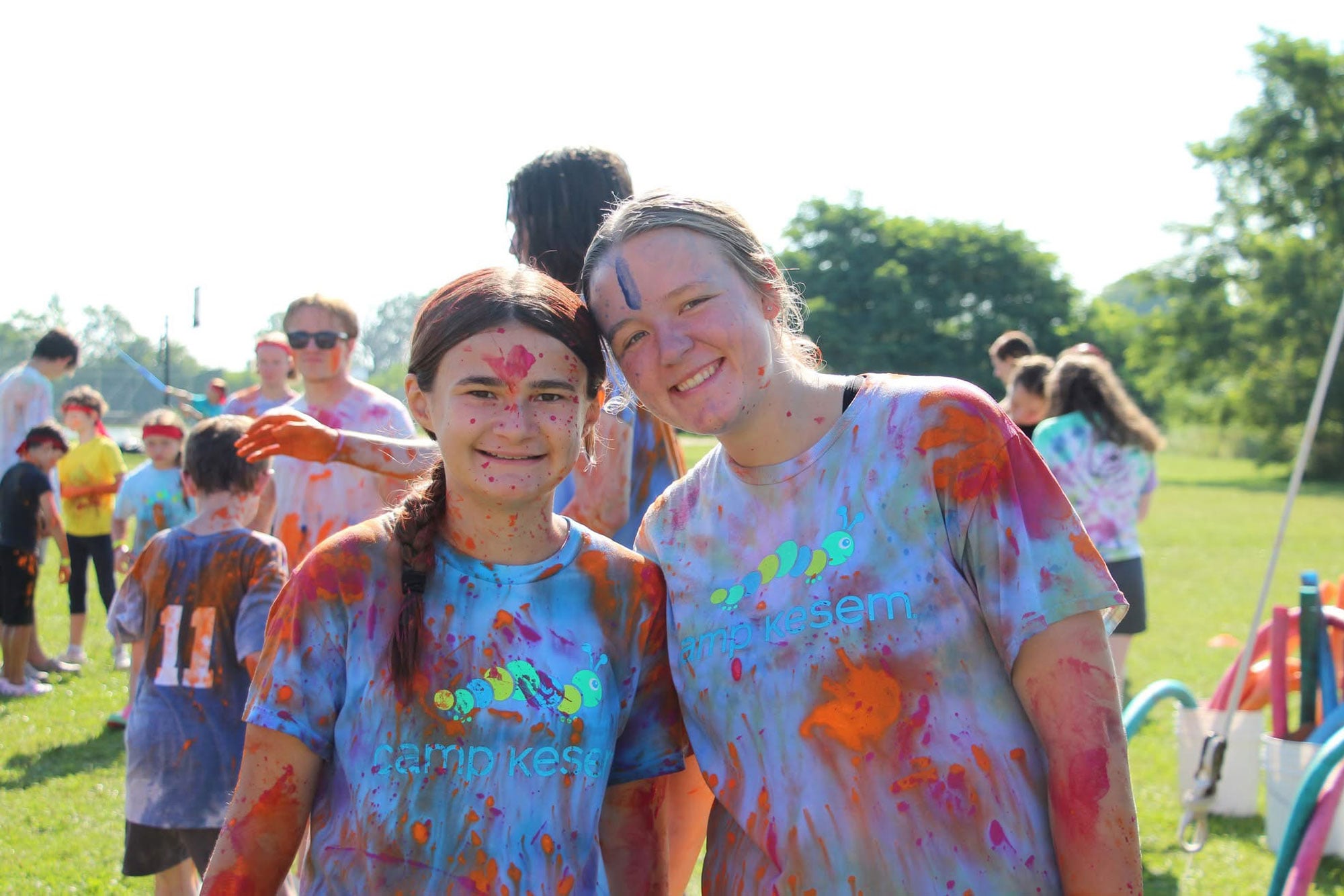
Student volunteers make this summer camp magical
Maibritt Miller smiles and her eyes sparkle as she scrolls through pictures of her time at Camp Kesem. She shares a shot of her and friends splattered with paint, arms around each other. In another photo she, a friend and a camp counselor dress up to sing “Fabulous” from High School Musical.
“It’s only five days, but it’s probably the most fun five days you’ll ever have,” said Miller, 15, of this summer camp that supports children and teens through a parent’s cancer diagnosis.
Balancing the joy of summer camp with the sorrow of cancer seems hard. Camp Kesem gives weeklong party vibes, but it’s mostly a space for kids to be themselves and join a community. Even more extraordinary, the camp is totally free — and run by college student volunteers.
Maddy Schuetz, a senior from Milton, Wisc., is in her fourth year as a Kesem volunteer and now co-director of the Kesem UW–Madison chapter. She added, “It’s surreal to see how a week of summer camp can have such a positive impact on a child. It puts into perspective all the work that we do.”
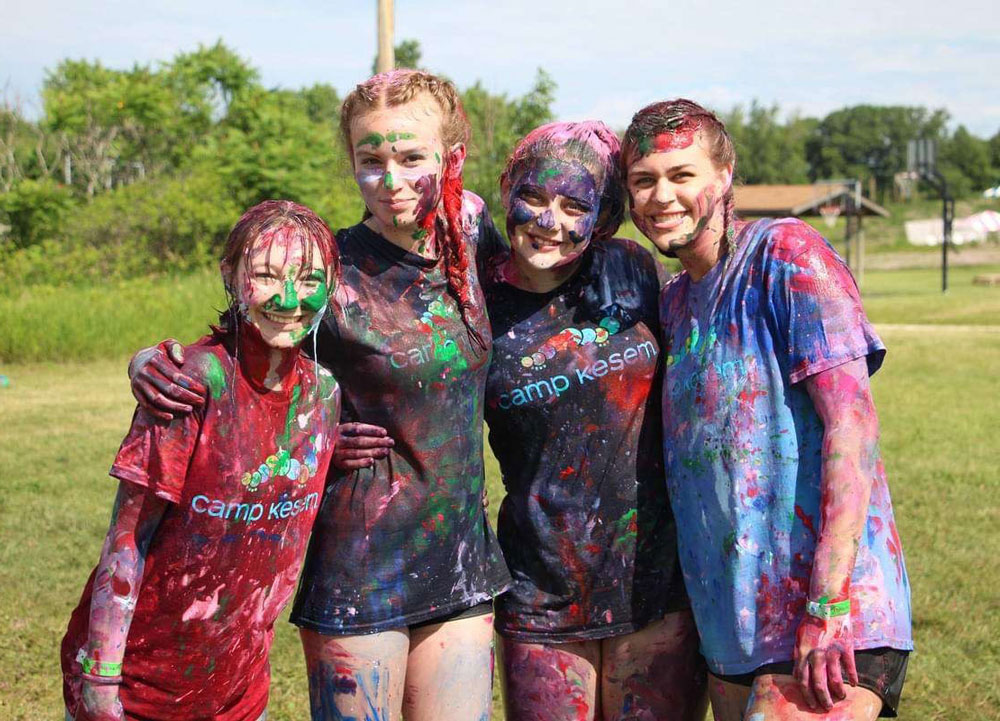
Maibritt “Moo” Miller (second from left) at Camp Kesem with friends during “Messy Games.”
Creating skillful, empathetic leaders
More than 5 million children in the U.S. have a parent battling cancer. Kesem was founded in 2000 to ensure they would never be alone. A study published in 2026 by Georgetown University found that Kesem programs improve children’s well-being, sense of belonging, emotional expression, coping skills and confidence.
A nationwide nonprofit, Kesem serves children and teens ages 6-18 and also gives college students the opportunity to lead, grow and give back.
Lariska Kons, a UW–Madison sophomore from Brookfield, Wisc., is in her second year with Kesem and knows this special place as a camper, too. After her mom was diagnosed with cancer when she was 7, Kons started attending camp in 2015. She added, “Kesem made me feel seen in a way that I didn’t know I needed at that time. I graduated as a camper and couldn’t wait to come back.”
A UW senior and co-director with Schuetz, Alayna Borgwardt, from Milton, witnessed the healing quality of Kesem when she watched relatives attend after their parent passed away from cancer.
Schuetz, Borgwardt and Kons agree that Kesem is transformative for campers as well as student volunteers, giving them numerous professional skills and lifelong relationships.
With oversight and guidance from the national Kesem organization, college students run nearly every aspect of Kesem chapters, from delivery of Camp Kesem to year-round services that require them to build strategic plans, recruit and train volunteers, facilitate outreach and fundraise to cover all costs. The Kesem UW–Madison chapter has 24 students on its executive board with 150 total members, 130 of whom apply to be camp counselors.
Miller said of her counselors, “They are just so energetic, caring and nice: Overall good vibes.”
It’s no small task to run three camp sessions of about 250 total campers, but students get on-site support from professional staff, including camp advisors, mental health professionals and nurses.
“I’ve learned a lot of business skills and what it takes to organize events and communicate with a large group of people,” Kons added, referring to their annual Make the Magic fundraiser that this year brought in $138,900.
And of course, students learn how to be compassionate, good listeners and that laughter can truly be the best medicine.
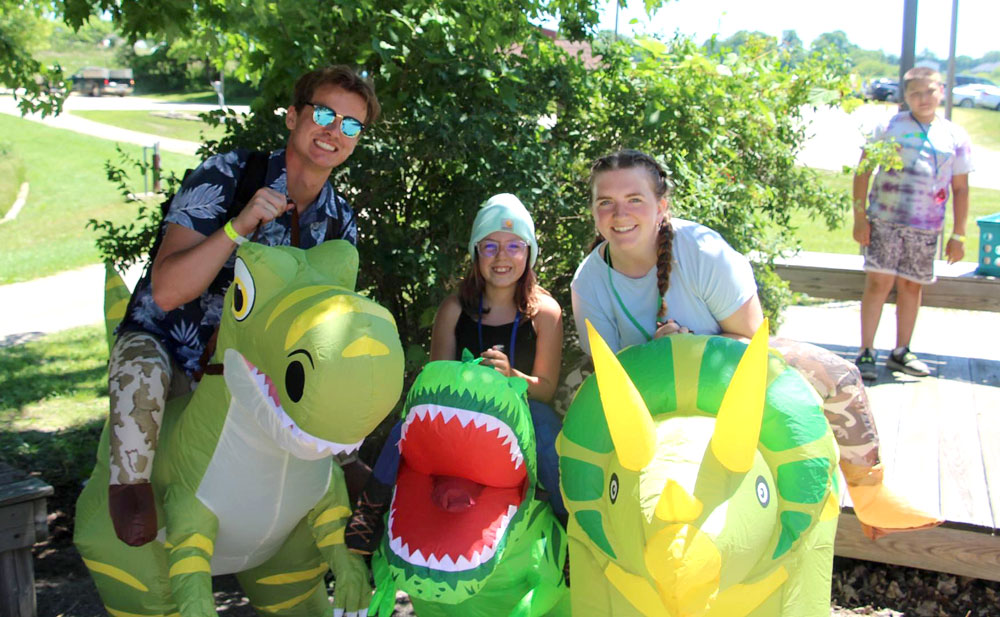
Ryan “Rhino” Matoska (left) and Maddy “Maple” Schuetz (right) with a camper dressed up for a prehistoric theme day at Camp Kesem.
Camp traditions serve a purpose
Seeing Miller’s photos from the camp in Fredonia, Wisc., you can tell that laughter and joy are nearly always part of the creative programming and meaningful camp traditions. But all emotions are welcome: “We get laughs, cries, smiles, everything,” said Schuetz.
Campers’ days are packed with activities like kickball, archery, yoga, swimming, crafting and song circles — with rest and meals in between. Evenings are full of dance parties, a talent show, bonfires and other Camp Kesem traditions: A favorite is camp names.
Every camper and counselor chooses their own name for the week. Added Kons, or “Lars Bars” as she’s known at Kesem, “It’s a really fun way to bring campers a little bit out of the real world and put them in a place of comfort and safety.” Just ask “Maple” (Schuetz) or “Goose” (Borgwardt).
Messy Games is another Kesem staple. Campers and counselors compete in team challenges, relay races and epic color wars using washable paint, slime and shaving cream. Clean-up is part of the fun with the entire camp heading to an open field with hoses and sprinklers to wash off before showering for dinner.
The anchor of camp is Empowerment Night, an evening ceremony in which campers and counselors gather to voluntarily share personal stories about how cancer has impacted their families.
“We want this to be an empowering space where kids can hear stories about people going through similar experiences. We want kids to understand that they are not alone,” said Schuetz.
After they pass candles around, decorate luminaries and shed some tears, they end the evening with a mood-boosting Empower Hour and bring out nail polish, makeup and hair products — campers giggle as they zhuzh up counselors before bed.
Miller added, “One of my favorite things to do is hair and make-up for the counselors after Empowerment. After being kind of sad, it’s lighthearted. Other than Empowerment Night, I feel like you don’t really think about sadness when you’re there. It’s just comforting and fun.”
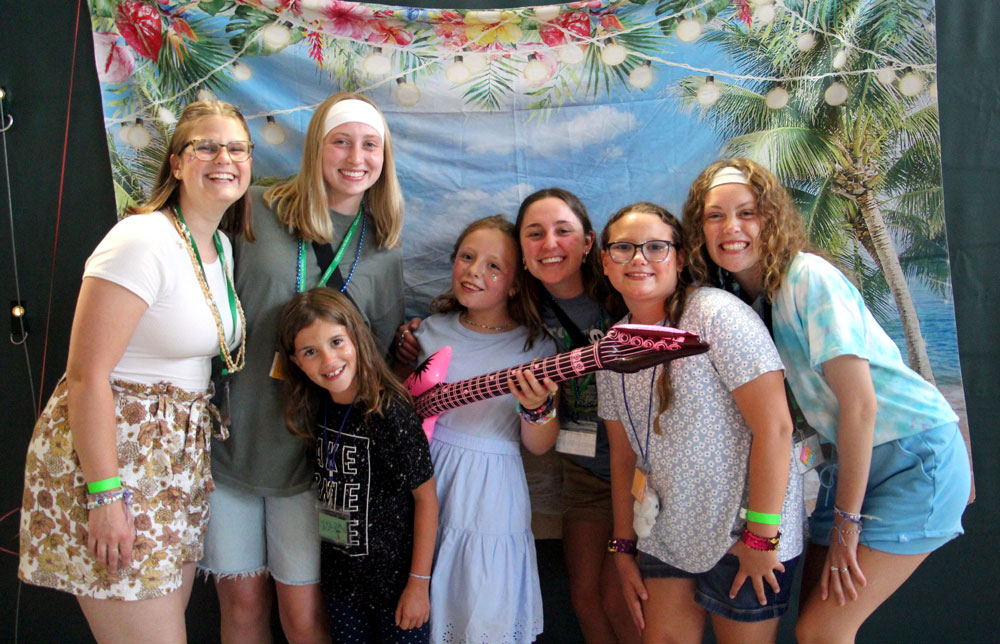
Lariska “Lars Bars” Kons (far left) and other Camp Kesem counselors Makenna “Dimples” Zeller, Emily “Boo” Schulte, and Kaitlyn “Kiki” Wanezek with campers at a camp dance.
‘Good things can come from bad things’
When you’re watching a parent undergo cancer treatment — or you lose them — life is difficult no matter your age. Camp Kesem provides a place where grief and joy can coexist.
“A camper once said to me, ‘Good things can come from really bad things. Cancer is one of the worst things in my life, and Kesem is one of the best,’” said Schuetz.
The community created at Kesem extends beyond one week of camp, influencing campers, their families and counselors. Kesem provides gatherings at conferences, cancer centers and other familiar community spaces as well as virtual monthly events year-round. Counselors have even attended funeral services for campers’ parents.
Borgwardt added, “One thing Kesem really teaches is the importance of community. It’s so important to have people you can lean on and a space you can enter where you know people are kind.”
Schuetz, Borgwardt and Kons all say Camp Kesem has influenced their career and life plans. Schuetz, studying communication arts and sports communication, said her life will always include philanthropy and giving back. Borgwardt, a nutritional sciences major, hopes to run a marathon and raise funds for Kesem.
Kons, majoring in art and psychology, hopes to become an art therapist: “Kesem has been a part of my life for so long, I don’t know how I can stop being involved. I’d love to become a mental health professional at the camp that’s been so vital to me.”
And Miller (“Moo” to her Kesem friends), whose mom is surviving and thriving after cancer, hopes to be a Kesem counselor one day and can’t wait to attend this summer. She said it’s given her a new perspective on life: “I learned that you really never know someone’s story. You don’t know what people have been through. It’s important to spread kindness wherever you go.”
For more information, visit the UW–Madison Camp Kesem Facebook page.
Borgwardt and Kons have taken Summer Term courses while serving with the Kesem chapter. How do you make the most of your summer? Share your unique Summer Term story with #MyBadgerSummer and design your Summer Term.
Published on Jun 24 2026
Last Updated on Jul 28 2026
Categories: News, Summer Term
Tags: careers, student life
