Short-term study abroad program shapes student’s career path in education
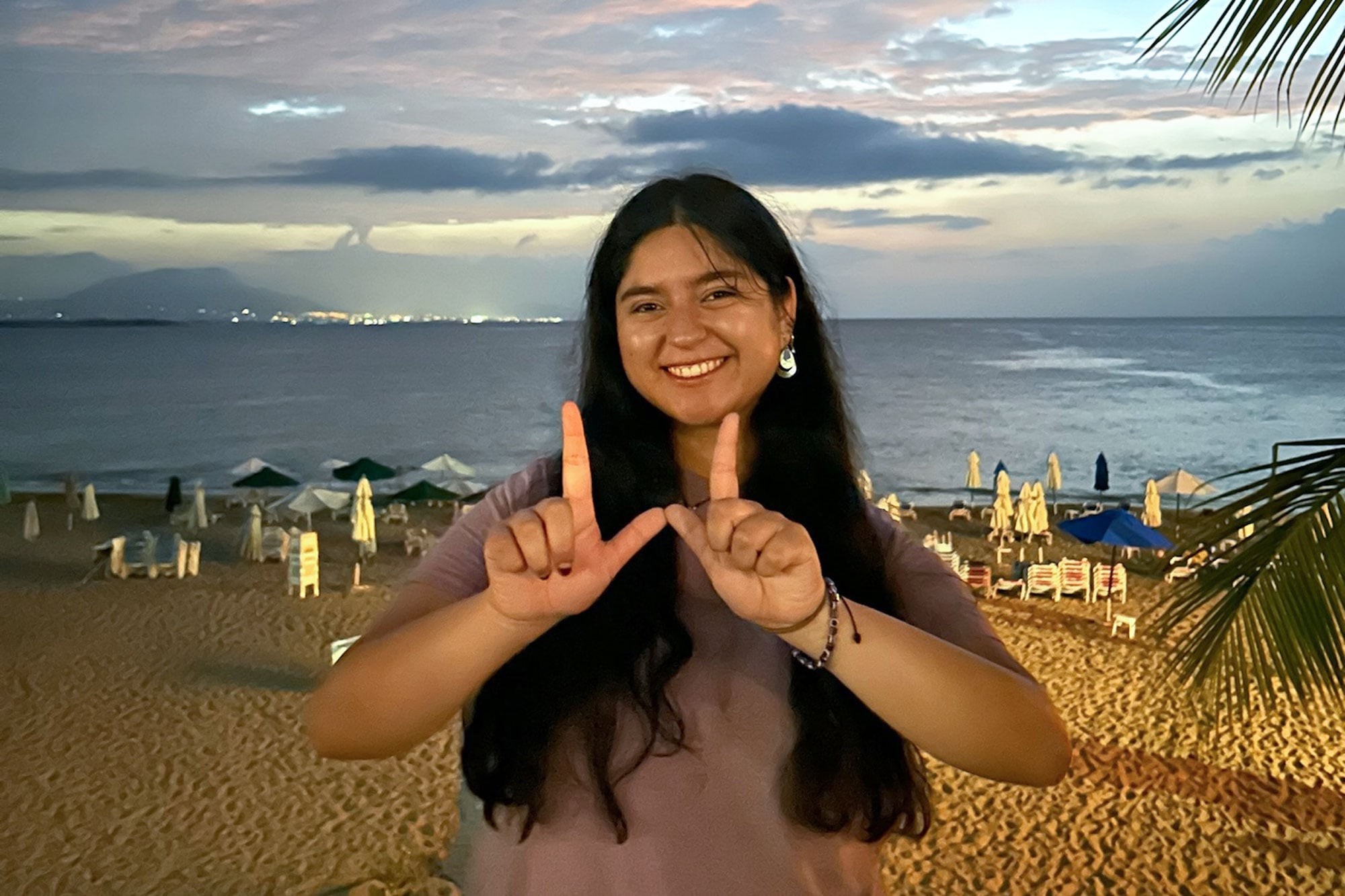
Jimena Rico-Sotelo shows her Badger pride during her study abroad program in the Dominican Republic earlier this summer.
When rising University of Wisconsin–Madison junior Jimena Rico-Sotelo was 5 years old, she entered the American school system speaking only Spanish.
“I know firsthand what it feels like not to understand English but want to learn how to speak it,” said Rico-Sotelo, a Milwaukee native majoring in elementary education with certificates in teaching English as a second language (ESL) and educational policy.
Fifteen years later, Rico-Sotelo used that personal history to fuel her professional passion for an immersive Summer Term experience in the Caribbean. Earlier this summer, she was one of 10 Badgers who stepped off a plane in Santo Domingo for UW Youth Engagement and Teaching ESL in the Dominican Republic, a three-week field experience featured by the School of Education’s Global Engagement Office and led by UW–Madison Educational Policy Studies Professor Lesley Bartlett.
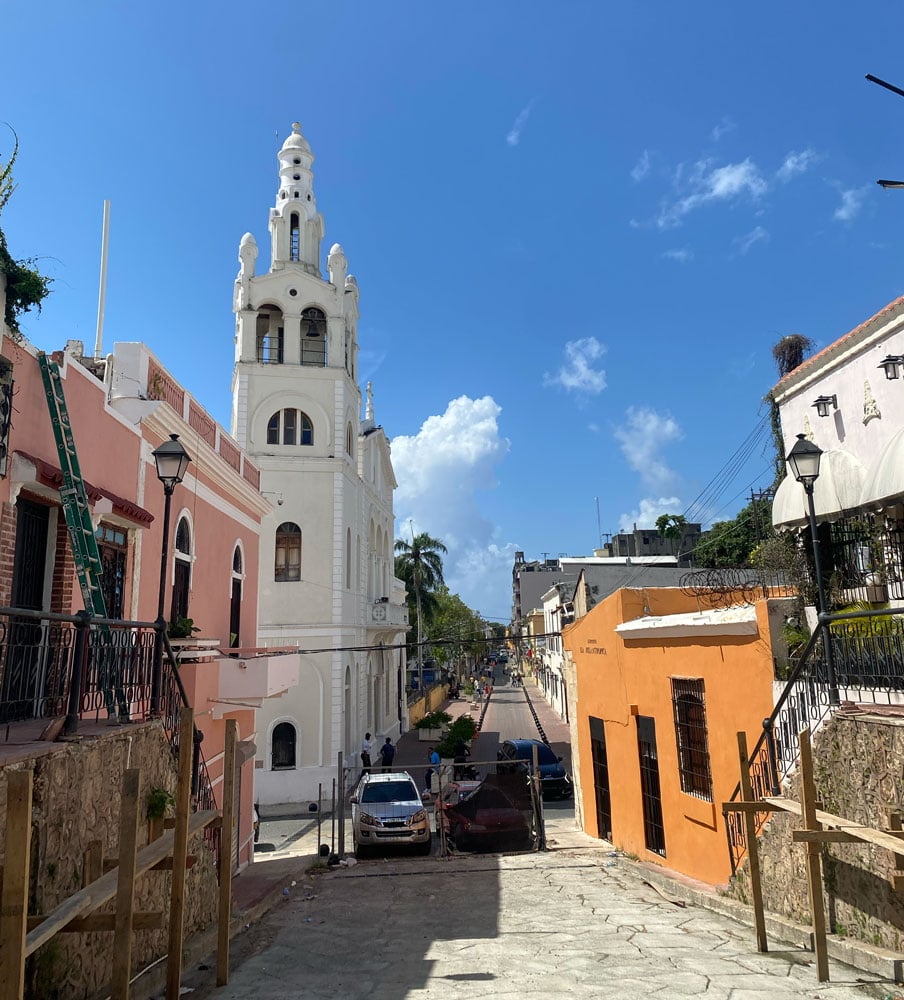
The Zona Colonial district of Santo Domingo, a UNESCO World Heritage site.
Offered in partnership with International Academic Programs (IAP), the intensive study abroad program combines culture, history, field trips, guest speakers and curriculum development opportunities with hands-on ESL instruction at the Dominican Republic Education and Mentoring (DREAM) Project, a nongovernmental organization. Students earn 3 credits for completing the program, which is open to all majors.
“This group of talented students far exceeded my expectations,” said Professor Bartlett of this year’s student cohort. “Throughout the program, I watched them transform abstract teaching ideas into meaningful skills while fostering community engagement and cross-cultural learning. They adapted quickly to new challenges, bringing their best selves every day.”
Below, Rico-Sotelo shares more about her time in the Dominican Republic, seeing educational policy in action and how a short-term program made a long-term impact on her life.
What prompted you to take the UW Youth and Experiential Education study abroad program in the Dominican Republic?
I wanted to take this opportunity to explore my professional and personal goals of becoming a leader people can rely on. Because I was a non-native English speaker for the first five years of my life, I can be a supportive role model for young students. I wanted to work with younger students because I think curiosity and patience are key principles to a good education.
I not only wanted to gain teaching experience throughout this program, but also to really immerse myself in a culture outside my own, so that I can become acclimated to any changes that may come my way throughout my career. Professor Lesley Bartlett is an incredible teacher who knew what she was doing the entire time and used her personal knowledge of the Dominican Republic to guide all the students in our group.
How did your experience as a child who first learned English when you started school inform your ESL work with children during your study abroad?
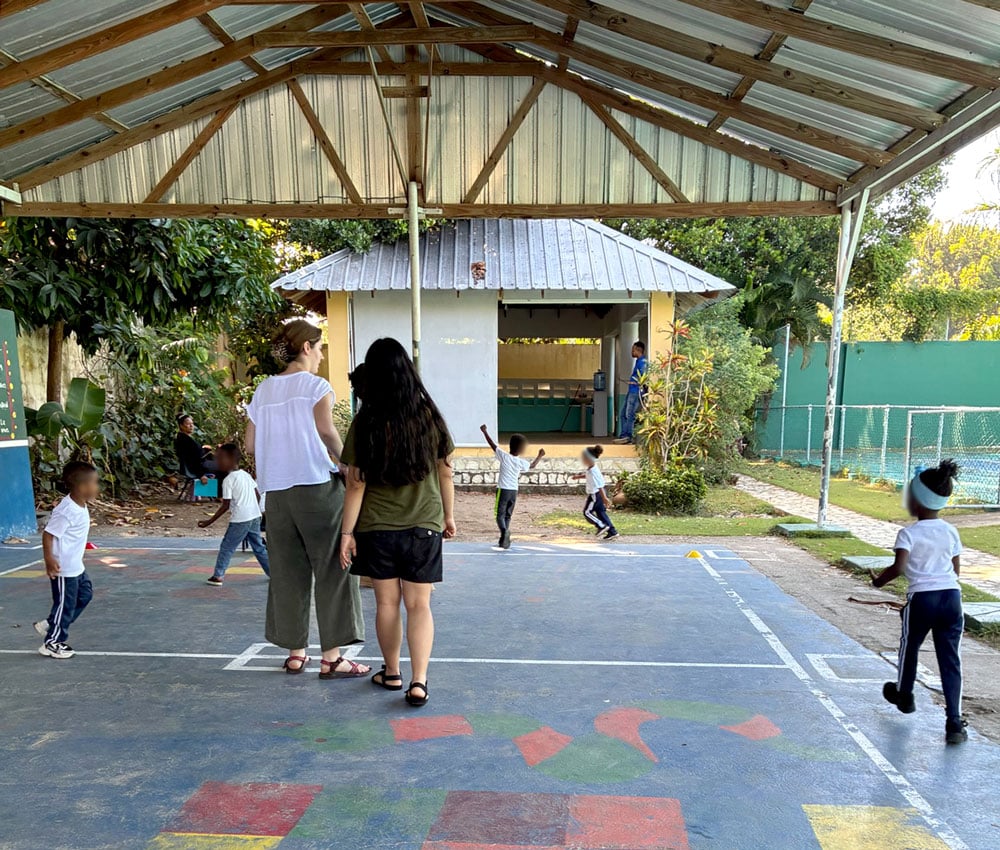
Jimena (right, in green shirt) works with children at the DREAM Project, an NGO in the town of Cabarete. During the study abroad program, Badger students designed an English- language curriculum and assessments.
Before going on the program, I did a lot of reflecting on memories from around that time and tried to remember how I felt as a 5-year-old hearing English for the first time. I realized I didn’t like learning English because of how long words or phrases are compared to Spanish. For example, in English one would say “How are you?”, meanwhile in Spanish it is simply “¿Como estas?”. Even though there is only one extra word in the English translation, it was hard for me to remember all the parts of that question.
Taking this into consideration, I knew I wanted not only to shorten my vocabulary when teaching ESL in the Dominican Republic but also to find ways for the kids to correlate an action with a word. During my time there, I introduced a breathing technique that a lot of the kids loved called “Breathe in the pizza, blow out the candle.” The kids would hold an imaginary slice of pizza in their hands, tilt their heads toward it to show they’re smelling it, then take a deep breath out to represent blowing out the candle. I would have loved doing this type of exercise when I was first learning English because it includes a physical correlation to a verbal instruction.
How does this study abroad program fit into your major and your future career plans?
This program fits perfectly with my major, as I am studying to become an elementary school teacher, ideally in a setting where students’ first language may not be English. Additionally, I gained a lot of classroom teaching experience before I officially start student teaching this upcoming spring semester.
Moreover, I am pursuing a certificate in educational policy, and this experience allowed me to look at how school systems work in the Dominican Republic. It is important to examine how other countries and communities manage their schools because, in my opinion, the American educational system should always take note of what works for some kids, especially in a modern-day world with a lot of migration. Being granted the opportunity to see behind the scenes of how nonprofit organizations create safe spaces for children was incredibly life-changing because it reassured me about what I want to do with my life.
What are your biggest takeaways from your time in the Dominican Republic?
The biggest takeaway definitely came from the cultural immersion. Before the trip, I knew we would spend a lot of time with members of the community, but I did not expect to learn so much about the local culture. Toward the end of the program, I found myself understanding references to Dominican popular culture and terms I was previously unfamiliar with.
This program helped open my eyes to the differences in lifestyles people experience. Since this trip, I have learned to appreciate and use resources to the best of my ability, so I don’t fall into wasteful habits. An academic takeaway I got from this program is that education is a universal gift. Regardless of which part of the world you’re in, schools all have the goal of helping children strive to reach their full potential.
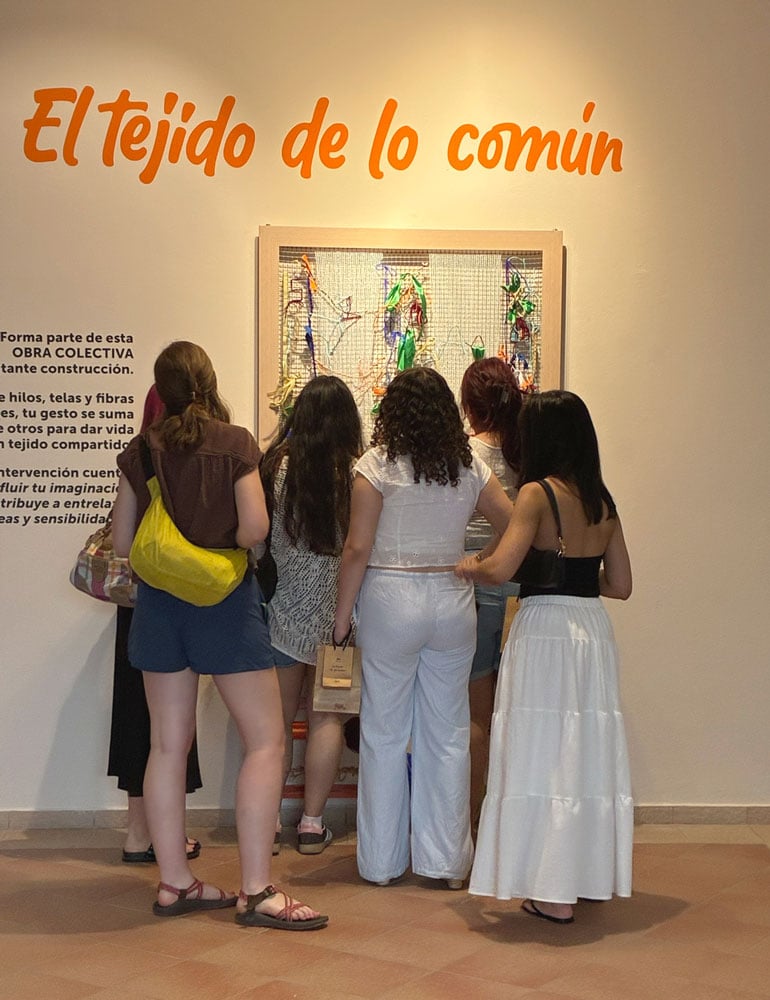
Students inspect a work of art at Centro Leon, a museum in Santiago de los Caballeros. The artwork was part of an exhibit called “The Common Thread.”
What would you say to other students considering this type of short-term study abroad experience during Summer Term?
Although three weeks may seem like a short amount of time to travel to a new country and participate in an academic program, I can guarantee you’ll learn so much!
We spent one week in Santo Domingo and two weeks in Cabarete. However, it was during passing periods between one main activity and the next that I was able to capture so much information about the city we were in, the culture that surrounded us and the people who live there. The work and activities we did throughout the program were perfectly distributed, so I felt busy but never overwhelmed.
What’s next for you this summer?
For the remainder of the summer, I will teach at a camp in Milwaukee, Wisconsin. At this camp, I teach a variety of mini-camps — like chess, fiction writing, playwriting and weaving — to students ranging from kindergarten to eighth grade. It’s my second year teaching at this camp, and I am very excited to be in a classroom again!
Then, in August, I will be returning to Madison to continue my second year of mentoring incoming college freshmen through the Center for Educational Opportunity. I am extremely grateful and glad I studied abroad, and I cannot imagine a better start to my summer and professional career.
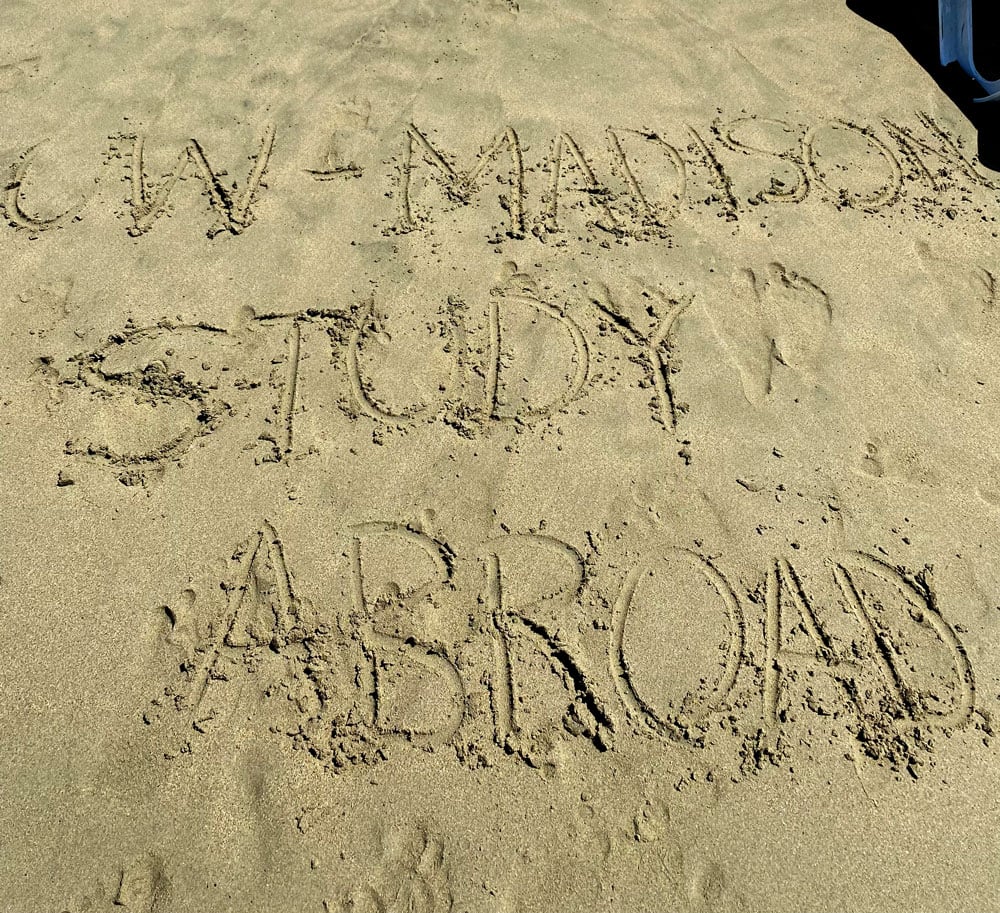
Visit UW–Madison’s Study Abroad office for a host of high-quality study abroad, domestic study away and international internship opportunities available year-round. Search 300+ programs in more than 80 countries by duration, area of focus, language of instruction and more. Contact the relevant study abroad advising office for more information.
Check out the Summer Term website to learn more about designing the summer that’s right for you. And don’t forget to follow @uwsummer on Instagram to see how fellow Badgers are making their summer count. You can share your summer story using #MyBadgerSummer.

Post written by Jill Schaefer.
Published on Jul 09 2026
Last Updated on Sep 02 2026
Categories: Student stories, Summer Term
Tags: courses, education, international, languages